In short, Icelandic is similar to Old Norse with the exceptions of various, relatively minor differences in spelling, pronunciation, and grammar. Despite their similarity, though, they are definitely not the same language anymore; no language is able to go through time without experiencing some level of change. That being said, though, out of all the modern Scandinavian languages, Icelandic has remained the closest in familiarity with Old Norse.
Yet, I should mention that even Old Norse had many variations. The standard of Old Norse that is used today is based off of just one branch of Old Norse, called Old West Norse, which itself branched off into both Old Icelandic and Old Norwegian.
Anyway, whenever I use the #Icelandic tag on my Old Norse posts, it is meant to indicate that the word in question still appears the same in modern Icelandic (in terms of spelling and meaning, not pronunciation) as it did in Old Norse.
My purpose is to promote a sort of linguistic relationship between the two languages. In other words, I try to encourage that learners of Old Norse consider learning Icelandic as well, since many of the concepts learned in Old Norse can help in learning Icelandic; many words and grammatical cases can be transferred over directly. I tend to view Icelandic as a sort of ‘living’ form of Old Norse (it has, after all, developed from Old Norse on the island relatively untouched by outside linguistic influences). It is also for this reason that many people will pronounce Old Norse with modern Icelandic pronunciation, though, it should be noted that this would not be the ‘authentic’ way of speaking Old Norse.
If you have the time, here is an amazing video on this topic from someone way more qualified than me to talk about this (Dr. Jackson Crawford):
Otherwise, thank you for asking. I hope I was able to clear up you concerns without causing any additional confusion. Hopefully including the tag is not misleading, and, if it is, perhaps I should be more clear on my posts, or omit it in future posts.
Með vinsemd og virðingu, (With friendliness and respect,) Fjörn
Komiði sæl og blessuð, vinir, (Come happy and blessed, friends,)
This post is part of a collective project called the Víkingabók Database. The goal of this project is to compile various resources, whether as links or lists (particularly of books, articles, or sites), that relate to the fields of medieval Scandinavian and Irish studies. This project began on the 6th of December, 2016. This post may be updated in the future so that the information it contains remains current and applicable. In such instances, an amendment date will be provided. As of the date provided below, you may view this post, and the others associated with it, on the following platforms: Tumblr and WordPress.
This post was last updated on: 12 JAN, 2017.
DÖNSK TUNGA ORÐ (OLD NORSE WORDS):
First off, dönsk tunga is what the medieval Scandinavians themselves called their language, which we now call ‘Old Norse’.(1.) This translates to ‘Danish tongue’, and was likely called such because of Danish political authority, mainly due to their early centralization (among other factors) in comparison to other Scandinavian regions.
As for pronouncing these words, there are two methods for Old Norse. I prefer the modern method, but I have provided both methods, of course. The information can be found in Jesse L. Byock’s book, listed below, but I have also made posts about these methods on this blog. Here are links to those respective guides on pronunciation:
The list provided here on this post is meant more for reference, or, perhaps more appropriately, for the casual learner, or even an already (somewhat) familiar learner. In other words, this list is not meant to learn from (at least not from scratch), but to complement more reliable sources of learning, if not just for casual entertainment and practice. If you would like more comprehensive resources for learning Old Norse, see the citations at the bottom of this post.(2.)
Here, each word is included in an alphabetically ordered list, including basic (and I do mean basic) grammatical information and English definitions. If any questions concerning this list arise, send them my way via an ask and I will elaborate or explain the issue. More words will be added roughly every thirteen weeks, or every three months. Nonetheless, individuals words are posted once a week, on Wednesday, and can be viewed here.
I hope this information has been helpful. If you have any questions concerning this list, or pertaining to the project in general, feel free to contact me at fjorntheskald@gmail.com. If you are viewing this post on Tumblr, feel free to send me either an ask, message, reply, or reblog to voice any concerns or feedback. If you have any additional information you would like to add to this post, such as updated text availabilities, contact me using any of the methods listed above.
Æsir leiða þig. (Gods guide you.)
FOOTNOTES:
1. Jesse L. Byock, Viking Age Iceland. (London: Penguins Classics, 2001), 11-12.
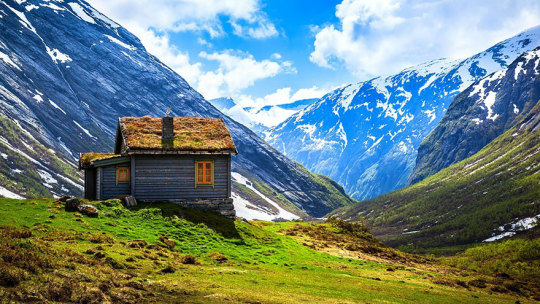
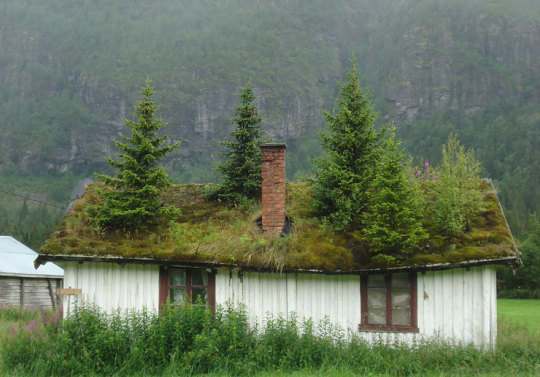
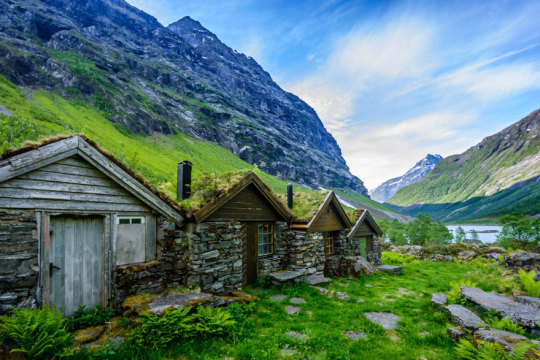
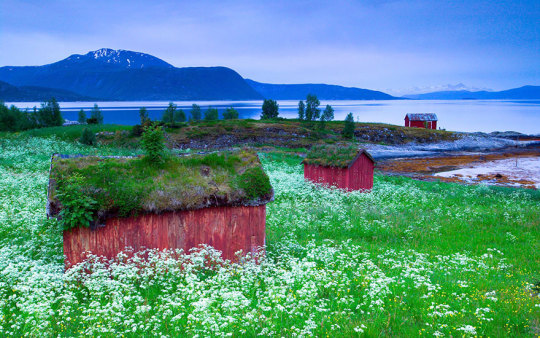
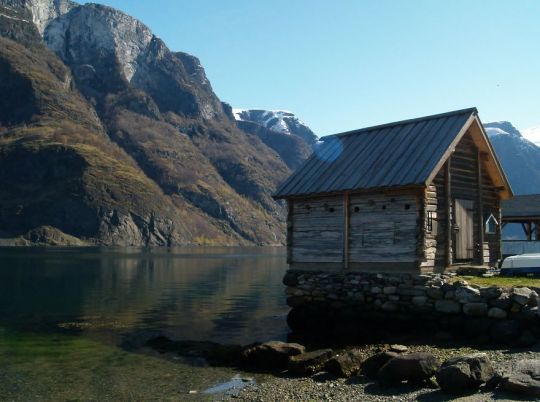
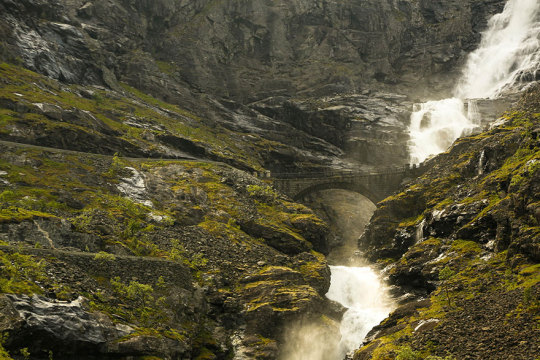
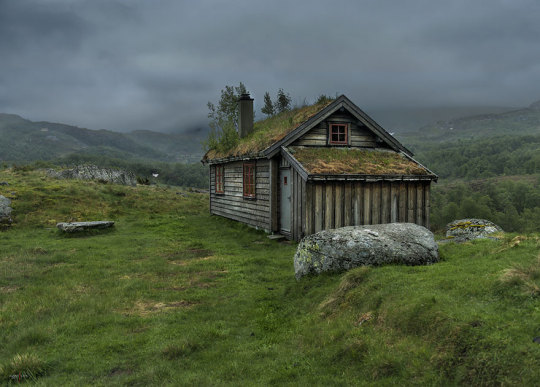
The Norwegian countryside is strewn with architecture that looks better suited to crown the pages of a fairytale book. More commonly known for its Vikings heritage and fjords, these photographs display a wide variety of architectural styles that have been used throughout the Middle Ages to the 19th century in Norway. Check out the stunning collection below.
Crooked and towering wooden churches beckoning like an old crone’s fingers, winding stone path weaving through a forest, hidden waterfalls and lonely wooden cabins overlooking a vast valley at its base are some of the outlandish homes and architectural designs we have featured in this series. Teetering Stave churches, eerie waterfalls cascading down like a creature with its own mind, wooden homes made in the typical Norwegian indigenous style called byggeskikk have none of the linearity or conformity that modern buildings do, and have whimsical elements that heighten its sense of magic.
Each of these structures below have a particular way of being set into its own environment, standing out from the elements without obstructing nature. Most of the buildings and bridges and pathways have been built with stone and wood balance the scene it has been engineered upon.
This is a subject that I frequently post about, and yet its basics have yet to be properly discussed. This post will help you to achieve familiarity with the Icelandic language, both in terms of written characters and their respective sounds. This guide may also be used as a method for pronouncing Old Norse. It is a lengthy guide, but that is because Icelandic, in all its beauty, is a bit difficult for most people to pronounce. In the end, this quite is only “basic” because it does not delve deeply into the linguistics behind certain sounds involved. Nonetheless, this guide should provide to be very helpful!
When working through this guide, try to avoid becoming overwhelmed. I strongly recommend working through only one section at a time.
I actually should not have used the tag for that word, so I have corrected myself by removing it (the reason for this is explain below). However, Icelandic, especially in a grammatical sense, has not changed very much from its Old Norse past-self. In fact, the standard for Old Norse is based off of Old Icelandic, which was still Old Norse, but only one out of a handful of dialects. There were four major dialects, split into two categories (West Old Norse and East Old Norse, which both stem from North Germanic, or Proto Old Norse):
West Old Norse Old Icelandic Old Norwegian
East Old Norse Old Danish Old Swedish
For this week’s word, which is vápn, the modern Icelandic version is vopn. They are very similar, which is why I sometimes use the tag Icelandic as well. Yet, they are not the exact same in this case, and so it probably is misleading to leave the tag.
Other words are the exact same in both Old Norse and modern Icelandic. Some examples are: mikill (great), dóttir (daughter), ferð (journey), skip (ship), and fyrir (before; for). Furthermore, a vast majority of word are only different by a single letter of variation, as is the case for this week’s word. Others like this are maðr (maður, man; person), sterkr (sterkur, strong), and góðr (góður, good).
I honestly should be a bit more careful and restrict my usage of that tag for only when both words are exactly the same. Although, I have used this tag so often to demonstrate the similarities that exist between Old Norse and modern Icelandic. Either way, there is a justification to using the Icelandic tag when discussing Old Norse, but it is better to be cautious and not mislead anyone into thinking that they are still the same language, because they definitely aren’t. In the end, Icelandic is simply a language that has uniquely held onto its older roots, which reside in Old Norse.
Nonetheless, I do thank you for bringing attention to this so that I can improve myself in only using such a tag to indicate when the words are not just similar, but identical. I hope this discussion was helpful to you and others!




 Tasertrickslove