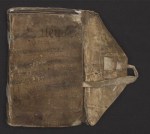
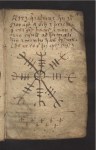
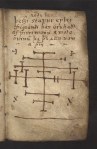
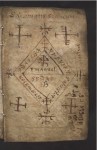
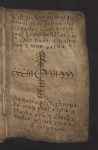
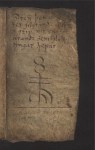
The ‘Little Book Of Magic’ is a seventeenth-century Icelandic manuscript, written on animal skin and containing magical staves, sigils, prayers, charms and related texts.
It is known to have once been owned by Icelandic Bishop Hannes Finnson who was alive from 1739 until 1796 and known for having a vast library containing many volumes of magic related texts and manuscripts.
At long last, here is my collaboration with The History of Vikings Podcast, where we chat about the opening chapters of Völsunga saga! I hope that you’ll give it a good listen, because it’s a truly fascinating discussion of a legendary Norse saga! Also, do let me know what you think about this podcast collaboration! Should I do this type of thing more often? Let me know!
🍃 FJÖRN’S FELLOWSHIP(Patrons): Anastasia Haysler, Cataclysmit, Cooper Brown, Froggy, and Kathleen Phillips. Thank you all for your gracious support and fellowship.
Let me begin by saying that there are no venomous snakes in Iceland and only one very rarely found in Scandinavia so the recurring theme of venomous snakes in historical Icelandic texts seems incongruous at first. However, what is commonly translated to mean “snake” in English, is often less clear in Old Norse. The actual word used (in Old Norse) is “ormr” (often referred to as “wyrm” in English).
The quote from Gylfaginning is as follows: “Þá tók Skaði eitrorm ok festi upp yfir hann, svá at eitrit skyldi drjúpa ór orminum í andlit honum, en Sigyn, kona hans, stendr hjá honum ok heldr mundlaug undir eitrdropa.”
Ormr is commonly a serpent rather than a “snake”. Although the two are very similar, a serpent is more commonly seen as a mythical creature. Further examples would be Jörmungandr (otherwise known as “midgardsormr” and who spits venom) and also the serpents that are said to drip venom on the unworthy in Náströnd in the description from Völuspá:
Old Norse – “Fello eitrdropar inn um lióra. Sá er undinn salr orma hryggiom.” English – “There fell drops of venom in through the roof vent. That hall is woven of serpents’ spines.”
Even in modern Scandinavian folklore, the Linnorm is known for it’s corrosive and poisonous venom that can be spewed as well as bitten.
So from all of that, we can reasonably assume that we are discussing a mythical serpentine creature with a corrosive venom rather than a typical snake as we understand it today.
VIKING LORE HELD THAT BOTH WEAVING AND SORCERY WERE WOMEN’S WORK, DITTO THE ORDERING OF THE HOUSE ACCOUNTS. MANY CULTURES HAVE HISTORICALLY LEFT ACCOUNTANCY TO WOMEN! MANY SOCIETIES HAVE ALSO LEFT FIBERCRAFT TO WOMEN BECAUSE IT IS TEDIOUS AND REPETITIVE BUT ALSO VERY NECESSARY. SEE ALSO: COOKING, CLEANING, BUDGETING, EMOTIONAL LABOR.
ANYWAY FIBERCRAFT, AS I HAVE DISCOVERED VIA LEARNING TO DO A WHOLE LOT OF IT, IS ALMOST ENTIRELY APPLIED MATHEMATICS EXCEPT FOR THE PART THAT’S ENGINEERING (WHICH IS ALSO MATHEMATICS). ONCE YOU LEARN EVEN THE BASICS OF KNITTING, SEWING, AND WEAVING, IT BECOMES ABSOLUTELY INCREDIBLE TO REALIZE MEN THINK WOMEN ARE BY VIRTUE OF THEIR SEX (these are of course sexist gender-essentialist men who are not cool with trans people) ILL-EQUIPPED TO DO MATH SOMEHOW. HOLY SHIT, HAVE YOU SEEN HEIRLOOM KNITTING PATTERNS? HAVE YOU SEEN THE FORETHOUGHT THAT GOES INTO WORKING A HARNESS LOOM? OH MY GOD.
THIS IS, THEN, WHERE PROGRAMMING (AND SORCERY) COMES IN. A PROGRAM IS “CODED INSTRUCTIONS FOR THE AUTOMATIC PERFORMANCE OF A PARTICULAR TASK”. WEAVING IS OFTEN A BINARY PATTERN: OVER/UNDER. PUNCH CARDS ON ADVANCED LOOMS CAN SET WHETHER THREADS GO OVER OR UNDER, AND SWITCHING THE CARDS AROUND YIELDS DIFFERENT PATTERNS OF CLOTH. A DUDE NAMED JAQUARD DEVELOPED EXTREMELY COMPLEX PUNCH CARDS THAT STARTED TO ENCODE HIGH VOLUMES OF INFORMATION FOR INCREASINGLY AUTOMATED LOOMS. A HUNDRED YEARS LATER WOMEN ARE USED AGAIN FOR THE ‘TEDIOUS BUT NECESSARY’ BUSINESS OF USING BINARY ON/OFF CARDS TO WRITE PROGRAMS FOR EARLY COMPUTERS.
WHERE SORCERY FITS INTO ALL THIS IS HAVE YOU EVER SEEN A WOMAN USE A CARD LOOM REALLY FAST? IT’S THE MOST INTIMIDATING SKILLSET OUTSIDE OF A RODEO. SHE 100% LOOKS LIKE SHE COULD MAKE YOUR BUTT FALL OFF IF YOU CROSSED HER. APPLIED MATHEMATICS / ENGINEERING IS BAFFLING TO WATCH FROM THE OUTSIDE, ESPECIALLY WHEN IT COMES TO FIBERCRAFT. YOU CAN MANIFEST WITH YOUR MIND AND HANDS THIS HIGHER AND TRUER ARCANE PLANE OF EXISTENCE INTO A NICE SCARF AND KEEP YOUR HUSBAND ALIVE FOR THE WINTER. MAYBE IF HE CROSSES YOU YOU CAN ALSO MAKE HIS BUTT FALL OFF.
I TOTALLY ACKNOWLEDGE THAT MEN DO FIBERCRAFT TOO BUT THIS WAS SPECIFICALLY ABOUT THE INTERSECTIONS BETWEEN WOMEN, MATH, FIBERCRAFT, AND MAGIC, SO THERE YOU GO.
You may have known this already, but the Apollo guidance computer’s core memory was literally woven strands of copper, and it was all done by hand, by a bunch of women. Because who else knows how to weave things?
*SLAMS HANDS ON TABLE* WOMEN’S WORK SENT MEN TO THE FUCKING MOON HOW IS THAT NOT MAGIC AS HELL
Oh oh oh oh this is my subject on Viking reenactment gigs, I’m the group’s Vala and I also fill in for the weavers and spinners because IT’S THE SAME SHIT let me tell you about it 😀 😀 😀
SPINNING with a drop spindle, none of your fancy high-tech spinning wheels here my friend, SPINNING OMG is literally taking undifferentiated fluff and turning it into the most useful and life-essential item in your whole civilisation with little more than a click of your fingers–without thread you have no sails, no clothes, no blankets, it’s literally power of life-or-death shit here, it is magic AS FUCK. That’s without doubt why the Norns were spinners and weavers.
There was laws about not saying people’s names or talking about people when you’re spinning, because you’re basically bringing something into being out of nothing, and with that kind of power you could just as easily bring events into being. So folks probably look the other way when you’re spinning thread for your son’s shirt and you want him to be victorious and honourable, but if you’re spinning away and bitching out about that ho Ingvar (see below) and how she stole your man and deserves the same to happen to her, that’s a crime. You’d be in better legal standing if you just punched her, because enchantment against a person was seen as sneaky and underhanded, with all connotations of forethought and antisocial intention, while punching someone could be an understandable lapse of self-control.
It was also forbidden to spin “against the sun” (ie: counterclockwise) because ok we also know there’s a mechanical aspect to that as well, it’s very useful to have the twist going in the same direction at all times so it doesn’t cancel itself out, but it was believed that an item made from backwards-spun thread could literally kill a person, there’s an account of a Vala spinning a shirt to murder a priest and it’s inferred that it was spun backwards. Because like, the sun is the source of all life, and to go against the sun goes against life, and much as the anti-twist cancels out the twist, it cancels out life. Brutal.
And you couldn’t talk about people when weaving, either, because weaving is an extension of the whole something-from-nothing power, but presumably people did anyway because there’s an actual find of a weaving tablet with a curse carved on it “Sigvor’s Ingvar shall have
my misfortune” so basically every time the card was turned, it would strengthen the curse, and literally spin and weave it into being. HOW FUCKING AWESOME IS THAT. There’s also a find of a weaving sword with a “love poem” carved on it, note the quotemarks because this “poem” goes “Think of me, I think of you; Love me, I love you” THAT AIN’T NO POEM FAM THAT A SPELL. She probably making him (or her) a shirt.
And that’s three times I’ve mentioned shirts, so I should tell you that making a shirt for someone was a Big Deal, in a way it was sort of the period equivalent of the boyfriend sweater, with the sheer amount of labour that goes into making a shirt you have to really give a whole lot of shits about that person. There’s an account of a woman making a shirt for her brother-in-law while her husband was away, and it’s OMG DRAMA BOMB. The Vala I mentioned above really gave a lot of shits about murdering that priest. Hence, the most-likely-a-woman who owned the inscribed weaving sword could very well have been making a shirt for her crush, who may OR MAY NOT have been her husband. You know, she could’ve been like “hope my nice hubby thinks about me while he’s away” or she could’ve been like “damn, brother-in-law too hot” or she could’ve been like “damn, Ingvar too hot” (wlw aren’t attested at all but you gotta assume it happened because humans) but in any event she knew what was up. And making a shirt for someone wasn’t thought of as *overtly* magical, mostly, but there’s kind of a subtext to it that presupposes any shirt could be enchanted and probably was to some extent.
And this is just scratching the surface of the academically well established stuff, with none of my own hypotheses and observations. I can go on for hours.
I have talked about knitting and fiber arts with many different women of all sorts of religion and non religion, and the vast majority of them say that when they make special items, they put some kind of intentions into the garment.
For lack of better candidates, someone’s parents jokingly named the Norse God Loki as the child’s godfather. He decides to take this seriously.
The whole thing got started because my
dad was a professor of Norse Mythology.
When I was born he and mom had both just gotten jobs at a new
university, which meant moving to a new town where my parents didn’t
know anybody. That was my dad’s excuse for naming an ancient
Scandinavian trickster god as my godfather.
He claimed it made sense at the time; apparently I was something
of a trickstery child myself, always getting out of my playpen and
into strange places, or making rude noises at hilariously inopportune
times, or crying for no discernible reason and laughing for no better
one. Plus, it was pretty soon apparent that I had inherited my
grandmother’s bright red hair. So my dad liked to call me a child
of Loki, which amused my mom. It didn’t amuse her so much when he
told her dad, after he got a bit too pushy about me not having a
godparent yet, that in fact I did have someone looking after me and
his name was Loki Laufeyson.
Still, even my mom didn’t expect
anything more to come of that than a bit of a row when my grandfather
got home and looked a few things up, so they were both completely
stunned when Loki himself showed up on the doorstep a few hours
later.
I was much too young to remember that
particular meeting, but from what I found out later, I can imagine
something of how it went. Loki would have looked like a tall, lean
man with hair like fire. Not red hair like mine, which isn’t even
really red but orange-ish; this was hair in licks of red and orange
and yellow, really like fire. He would have had eyes like fire opals,
strange and glittering from one color to the next. And he would have
had scars running along the tops of and bottoms of his lips, little
rows of puncture marks, white and old but still clearly visible. But
the rest of him would have looked handsome and charming, like a movie
star, only better. He would have looked like what movie stars dreamed
of looking like, and he would have flashed my mom a brilliant
gleaming grin when she opened the door.
My apologies for the delay of this response. I have been a bit overwhelmed by the state of my inbox as of late, so my pace in answering academic questions has been rather slow.
THE OLD GODS AND THE NEW: Sitting on the Spiritual Fence.
I STILL STAND by the words I spoke then, in that elements of the Old Ways did not fade entirely with the presence of Christianity. Although Christianity sought to rid the Norse of their old ways, it was not (nor ever could be) entirely successful. Plenty of heathens, after all, had no problem incorporating other deities into their practice. Christians would have been opposed to such doings, and so were plenty of heathens (especially once forced conversions began), but not all. Considering that, the two are only diametrically opposed when viewed from the perspective of Christianity. The Old Ways were not set in stone; there was plenty of room for variation in practice, which never truly remained stagnant to begin with.
One of the best historical examples of a Norseman with mixed faiths would be Helgi the Lean, who was a Norwegian and became an early settler of Iceland. Landnámabók, the Icelandic Book of Settlements, has this to say about him and his faith:
“Helgi the Lean went to Iceland with his wife and children and his son-in-law Hamund Hell-Skin as well. Hamund was married to Ingunn, Helgi’s daughter. Helgi’s faith was very much mixed: he believed in Christ but invoked Thor when it came to voyages and difficult times (my emphases). When Helgi sighted Iceland, he consulted Thor as to where he should put in, and the oracle guided him north of the island. Then his son Hrolf asked Helgi whether he was planning to sail to the Arctic Ocean if Thor told him to go there? It was late summer, he said, and the crew thought it was time to get ashore. Helgi made land north of Hris Isle, just south of Svarfadardale, and spent the first winter in Hamundarstead. The winter was very severe.”(1)
And so Helgi had embraced Christ, yet still looked to Thor for guidance during specific occasions; for him, Christianity and the Old Ways intermingled seamlessly. It is important to mentioned, though, that Helgi’s case was not the norm. The fact that the author took the time (and materials) to specifically note that his “faith was very much mixed” suggests that it was an anomaly of sorts (but perhaps more so for a Christian author). The fact that this was even remembered long enough to be written shows that even his contemporaries (other heathens) found this to be a bit odd. Regardless of the author’s thoughts on this, Helgi is spoken of rather neutrally; there is little indication of any overarching hostility towards him; it is spoken as fact. The Icelanders of that time often had a talent for respecting the past without complete condemnation, after all.
But why would a heathen accept Christ to begin with? And if Christians were so strongly opposed to polytheism, how did some heathens manage to stay on the spiritual fence? Missionaries pushing for conversion emphasized that the acceptance of Christ required the rejection of all other gods, but some evidence has shown (such as the case of Helgi the Lean) that not all folk were accepting of this. Some heathens wanted to keep their old doors unlocked.
THE CONCEPT that ‘allowed’ some heathens to embrace the old gods and the new is something that has been called ‘adhesion’. Dr. Arthur Derby Nock has discussed the topic of conversion quite extensively in his 1933 book Conversion: The Old and the New in Religion from Alexander the Great to Augustine of Hippo. Although concerning a different flavor of paganism, the concepts discussed in his book can still apply to the Norse realm. Here is what he has said about heathens who once embraced both the old and the new:
“You have sufficient reason for disseminating a special form of piety if you are convinced that it affords a means of contact with the supernatural which each and every man needs or can with profit use in addition to those means which he has inherited and uses.”(2)
In other words, heathen Norseman saw the Christian God as a potentially useful addition to their spiritual (and even social) experiences. It was as if a new door was open to them, while still being able to keep other doors unlocked. So why do they still seem to be so diametrically opposed to one another?
FOR EVERY ACTION, there is an equal and opposite reaction. When the push for conversion became more forceful, resistance also became more forceful. Helgi the Lean was the product of a different time, in which he encountered Christianity in passing (likely via travel).(3) This meant that he personally choose to adopt Christ; his Old Ways were not immediately threatened by any imposing force. No one with power was telling him that he could not follow both (although Christian doctrine does its best to do so).
This changed however, when the tenth century began to shift into the eleventh. Powerful men like King Olaf Tryggvason began bloodied campaigns to convert the Norse people, which sparked a more prevalent resistance among certain heathens in regards to Christianity.(4) For once it was potentially useful and beneficial, but now it had become like a foreign empire seeking to entirely usurp their way of life. There was no place on the fence when powerful men desired more centralized authority.
After King Olaf’s death however, Norway partially reverted to Heathenry, which demonstrates that, even though he had converted many Norwegians, many of them still held the Old Ways in their hearts and returned to them.(5) In the end, forced conversion does not often leave a sweet taste in the mouths of those being pushed into a new worldview.
THIS TALE is more complicated than we tend to imagine. In the early years of exposure to Christianity, a handful of heathens intermingled the two faiths without trouble or worry. Helgi the Lean could be a Christian, but still look to Thor for guidance at sea. With no one in power telling Helgi how to live spiritually, he was free to open whichever doors he pleased; he was able to remain on the spiritual fence.
The assumption of incompatibility between these two spiritual paths comes from later times, and perhaps even from the overarching Christian lens that the West inevitably still looks through. From the viewpoint of Christianity, all old gods must be rejected upon the acceptance of the God. From the viewpoint of Heathenry, the Christian God could just be another one of many to call upon, depending on the situation. Therefore, they are only diametrically opposed when one looks at the situation through the lens of Christianity. Though, even some heathens could have argued that Christ had no place in the Norse mythos. We have little way of knowing what kind of contemporary criticism he may have faced for his spiritual position, after all.
As for the overall picture, the ideology of Christianity could not accept multiple gods and would inevitably demand the purging of the old gods for the new. And so when conversion efforts became more forceful, heathens would have become less willing to include the Christian God among their own. Through their intense battle, the two (generally) became more closed off to each other. Although time wore down such strife, eventually.
I TRULY HOPE that this has helped to clear things up a bit for you, although it feels more like it added additional complexity. Such is the nature of such a rich topic, I must admit. If you have any further questions, or wish to continue the discussion, do not hesitate to ask! I am more than happy to continue.
Með vinsemd og virðingu, (With friendliness and respect,) — Fjorn
NOTE: @gospel-of-yggdrasil: this question is quite similar to yours and actually plays considerably into how unique flavors of Christianity developed in Scandinavia. I would consider this a pretext to your question, which I plan to answer in the near future. I look forward to discussing that subject with you! In the meantime, I do hope that you find this answer to be interesting as well.
ENDNOTES:
1. Hermann Pálsson and Paul Edwards trans., The Book of Settlements: Landnámabók (repr., 1972; Manitoba: University of Manitoba Press, 2012), 97. (Chapter 218)
3. Many Norwegians stopped in the British Isles before finally making their way to Iceland (not to mention the Scandinavians who went raiding). As a result, many of them were exposed to Christianity on their way to Iceland, and some of them even converted before leaving. Unn the Deep-minded is a good example of a prominent Icelandic settler who came from regions of Scotland (see chapters 3-7 of Laxdæla saga). There have also been Celtic-Christian artifacts found in Icelandic burials, such as a bell, which would have had clear connections with Christianity (see Þór Magnússon, “Bátkumlið í Vatnsdal„ (Árbók hins íslenzka fornleifafélags, 1966), 31-2; or, for an English translation of this section, see Jesse L. Byock, Viking Age Iceland (Penguin Books, 2013), 295-7).
4. There are several sources to consider for further reading about King Olaf’s efforts. There is Snorri Sturluson’s Heimskringla, which contains The Saga of Olaf Tryggvason. There are also several sagas that recount these events, such as Njal’s Saga (for Iceland), and The Saga of Hallfred the Troublesome Poet (for a bit of Norway, but also a look into an individual’s struggle between the two). As for secondary resources, Jesse L. Byock’s Viking Age Iceland spends a fair amount of time on the subject, and it is not a heavily academic read. It is, of course, from a heavily Icelandic point of view, but still includes a bit about what was happening in Scandinavia to influence the events that occurred in Iceland. For this resource, see chapter 16. It should also be mentioned that King Olaf Tryggvason was not the only man to attempt forceful conversion. He is simply the most famous, in regards to Scandinavia. Other men did the same, such as King Harald Bluetooth of Denmark.
Thor is the foremost of them. He is called Asa-Thor, or Oku-Thor. He is
the strongest of all gods and men, and rules over the realm which is
called Thrudvang. His hall is called Bilskirner. Therein are five
hundred and forty floors, and it is the largest house that men have
made.
Thor has two goats, by name Tangnjost and Tangrisner, and a chariot,
wherein he drives. The goats draw the chariot; wherefore he is called
Oku-Thor. He possess three valuable treasures. One of them is the hammer
Mjolner, which the frost-giants and mountain-giants well know when it
is raised; and this is not to be wondered at, for with it he has split
many a skull of their fathers or friends. The second treasure he
possesses is Megingjarder (belt of strength); when he girds himself with
it his strength is doubled. His third treasure that is of so great
value is his iron gloves; these he cannot do without when he lays hold
of the hammer’s haft. No one is so wise that he can tell all his great
works; but I can tell you so many tidings of him that it will grow late
before all is told that I know.
– Prose Edda: Gylfaginning(Snorri Sturluson, translated by
Rasmus Björn Anderson)
Heimdal is the name of one. He is also called the white-asa. He is great
and holy; born of nine maidens, all of whom were sisters. He hight also
Hallinskide and Gullintanne, for his teeth were of gold. His horse
hight Gulltop (Gold-top). He dwells in a place called Himinbjorg, near
Bifrost. He is the ward of the gods, and sits at the end of heaven,
guarding the bridge against the mountain-giants. He needs less sleep
than a bird; sees an hundred miles around him, and as well by night as
by day. He hears the grass grow and the wool on the backs of the sheep,
and of course all things that sound louder than these. He has a trumpet
called Gjallarhorn, and when he blows it it can be heard in all the
worlds. The head is called Heimdal’s sword.
– Prose Edda: Gylfaginning(Snorri Sturluson, translated by
Rasmus Björn Anderson)
There is yet one who is numbered among the asas, but whom some call
the backbiter of the asas. He is the originator of deceit, and the
disgrace of all gods and men. His name is Loke, or Lopt. His father is
the giant Farbaute, but his mother’s name is Laufey, or Nal. His
brothers are Byleist and Helblinde. Loke is fair and beautiful of face,
but evil in disposition, and very fickle-minded. He surpasses other men
in the craft of cunning, and cheats in all things. He has often brought
the asas into great trouble, and often helped them out again, with his
cunning contrivances. His wife hight Sygin, and their sone, Nare, or
Narfe.
Loke had yet more children. A giantess in Jotunheim, hight
Angerboda. With her he begat three children. The first was the
Fenris-wolf; the second, Jormungand, that is, the Midgard-serpent, and
the third, Hel.
– Prose Edda: Gylfaginning(Snorri Sturluson, translated by
Rasmus Björn Anderson)
When the gods knew that these three children were being fostered in
Jotunheim, and were aware of the prophecies that much woe and misfortune
would thence come to them, and considering that much evil might be
looked for from them on their mother’s side, and still more on their
father’s, Alfather sent some of the gods to take the children and bring
them to him.
Hel he cast into Niflheim, and gave her power over nine worlds, that she
should appoint abodes to them that are sent to her, namely, those who
die from sickness or old age. She has there a great mansion, and the
walls around it are of strange height, and the gates are huge. Eljudner
is the name of her hall. Her table hight famine; her knife, starvation.
Her man-servant’s name is Ganglate; her maid-servant’s, Ganglot. Her
threshold is called stumbling-block; her bed, care; the precious
hangings of her bed, gleaming bale. One-half of her is blue, and the
other half is of the hue of flesh; hence she is easily known. Her looks
are very stern and grim.
– Prose Edda: Gylfaginning(Snorri Sturluson, translated by
Rasmus Björn Anderson)
Her name was Brynhild, and she was a valkyrie.
Odin sends them to all battles, where they choose those who are to be slain, and rule over the victory.
Yggdrasil, the World Tree By Simon E. Davies of Human Odyssey
In the beginning of the Norse cosmos, there existed an eternal Void, known as Ginnungagap. Out of this nothingness sprang Yggdrasil, a huge Ash tree. Its newly emerging branches held two primordial worlds; Niflheim, a world of ice & frost, and Muspellheim, a realm of molten fire.
When a spring erupted from Nifelheim (known as Hvergelmir), it created a river which crossed the void into Muspellheim. Here, the hot air scorched the freezing river creating a new world, known as Jotunheim, land of the giants.
From this bloodline of primordial beings came Odin, Vili and Ve, who despised the father of giants who ruled his people with malice and brutality. When the chance came, the brothers slew the frost giant, and from his body they created Midgard, a world of mortals. Surrounding this realm they placed a great ocean which nourished the roots of the great tree.
Yggdrasil grew ever higher, forming a new realm called Asgard, which is located on the highest branch of the world tree. This was where Odin, king of the Aesir would take his people to settle a new civilisation. It was said this race of gods brought culture and technology to the world of mortals via a great causeway called Bifrost.
Bifrost was a burning rainbow bridge, connecting Midgard (the world of mortals) with Asgard. This colourful overpass emerged from Himinbjörg, a mountain hall guarded over by the ever-vigilant Heimdall. This watchmen of the gods kept an eye on the mortals below, making sure no giants breached their homeland.
As Yggdrasil continued to grow, a new land emerged on one of its branches called Vanaheim. It was a land full of luscious forests and wild meadows. From this primal wilderness emerged a race of gods known as the Vanir. This tribal people lived near the coast, ruled by Njörðr, a seafaring god who loved wealth and magic, a trait common among his people.
A great tension broke out between the Vanir and the Aesir resulting in a long winded war. It eventually ended in a stalemate, so many of the gods sent their families as hostages to the opposing tribe to help bring them closer together. Njörðr’s son, Freyr, was placed in charge of Alfheim, homeland of the Elves. This class of god-like beings were said to be “more beautiful than the sun.”
These elves were also linked to another realm far below the Earth. Legend says a tribe from Alfheim were exiled from their homeland many eons ago, and eventually sought refuge with the dwarves of the underworld. These subterranean beings had build their homes around the roots of Yggdrasil, carving a network of labyrinths, mines and forges for their empire. They called it Niðavellir, and the elves, who skin eventually became black as night, called it Svartalfar.
All the beings of Yggdrasil, mortals, gods, dwarves and elves would eventually die, and their souls were destined for several realms. If the Aesir died valiantly in battle, they would find rest in Valhalla, for all others, Helheim was their inevitable destination. This dark and gloomy abode resided at the tip of Yggdrasil’s deepest root. This afterlife was ruled over by Loki’s daughter Hel, a strange being who was half black and half flesh-coloured, characterised by a gloomy, downcast appearance.
There are a number of sacred creatures which live within Yggdrasil. this includes the monstrous wyrm Níðhöggr who gnaws at the roots of Nifelheim, weakening the great tree of Yggdrasil. This frost dragon was also known for eating the corpses of the Nifelheim when found guilty of murder, adultery and oath-breaking.
Atop the highest branches of the world tree is perched a great eagle and his hawk companion Vedrfolnir, who sits between his eyes. The two stare deep into the Norse cosmos, perhaps representing insight and awareness.
Ratatosk is a squirrel who runs up and down the world tree to carry messages between the unnamed eagle and Níðhöggr the wyrm. This mischievous critter is said to stir trouble between the all knowing eagle and the world hungry dragon.
Among the branches of the Great Ash tree live four stags known as Dáinn, Dvalinn, Duneyrr and Duraþrór. These ravenous beasts eat the branches of the World Tree, perhaps representing the four seasons. When they eat too much, winter ensues, when they are full, the leaves grow thick and lush in the midst of summer.
Perhaps the most important guardians of Yggdrasil are the three Norns (witches) who lives at the well Urd (below Midgard). Their names are Urd “past”, Verdani “present” and Skuld “future”. These three hags are the goddesses of fate, who spend most their time spinning the threads of life, deciding the fate of every human, animal and god. Every day the Norns will also carry water from Urd’s well, and pour it over Yggdrasil. The water from the well is of vital importance to keep the tree green and healthy.
It is the Norns who foretold Ragnarok, the twilight of the Gods and the fall of Yggdrasil. It is said that Ragnarok will begin when the wolf, Fenrir, son of Loki, breaks free of his imprisonment. This will lead to a chain reaction of events including the Midgard snake Jormungandr rising from the sea and a wolf (known as Skoll) devouring the sun, and his brother Hati, eating the moon, plunging the earth into darkness. The stars will vanish from the sky.
Everything will come to a head in a huge battle that draws in all the races of the nine worlds. It will conclude with Surter, king of the fire giants, setting fire to the great Yggdrasil. The nine worlds will burn, and friends and foes alike will perish, culminating with the earth sinking deep into the abyss of the sea.